STP COMPLIANCE EHS REGALERT ROUND-UP

OCTOBER 31ST 2025

EU Waste Directive Expands Focus on Food and Textile Waste

EU Member States have until June 17, 2027, to incorporate the new requirements set out in Directive (EU) 2025/1892 into their national laws, regulations, and administrative provisions. The new Directive amends the EU’s framework Directive 2008/98/EC on waste, adding requirements for two significant waste streams: food and textile-related waste.

The revised food-waste requirements are far-reaching as they focus on preventing food waste generation along the entire food supply chain, including primary production, processing, manufacturing, and food services. Mandatory food waste reduction targets, relative to the average

EU Member States have until June 17, 2027, to incorporate the new requirements set out in Directive (EU) 2025/1892 into their national laws, regulations, and administrative provisions. The new Directive amends the EU’s framework Directive 2008/98/EC on waste, adding requirements for two significant waste streams: food and textile-related waste.

The revised food-waste requirements are far-reaching as they focus on preventing food waste generation along the entire food supply chain, including primary production, processing, manufacturing, and food services. Mandatory food waste reduction targets, relative to the average  are annual food waste generated between 2021 and 2023, specified for December 31, 2030, including a 10% cut in manufacturing and processing waste and a 30% per capita cut in restaurants, food service, and household food waste.  

Textile-related waste reduction is addressed by establishing a new extended producer responsibility (EPR) scheme that applies to listed (Annex IVc) textile, textile-related and footwear products, making producers financially responsible for the costs of waste product collection, sorting, and recycling. Member States have until April 17, 2028, to establish an EPR scheme for producers, including those selling online or across borders. Ultimately, Producers and Producer Responsibility Organizations  will have to publicly disclose performance data (e.g., collection rates, recycling levels) annually on their websites and provide specified data to the competent authorities.

are annual food waste generated between 2021 and 2023, specified for December 31, 2030, including a 10% cut in manufacturing and processing waste and a 30% per capita cut in restaurants, food service, and household food waste.  

Textile-related waste reduction is addressed by establishing a new extended producer responsibility (EPR) scheme that applies to listed (Annex IVc) textile, textile-related and footwear products, making producers financially responsible for the costs of waste product collection, sorting, and recycling. Member States have until April 17, 2028, to establish an EPR scheme for producers, including those selling online or across borders. Ultimately, Producers and Producer Responsibility Organizations

will have to publicly disclose performance data (e.g., collection rates, recycling levels) annually on their websites and provide specified data to the competent authorities. 

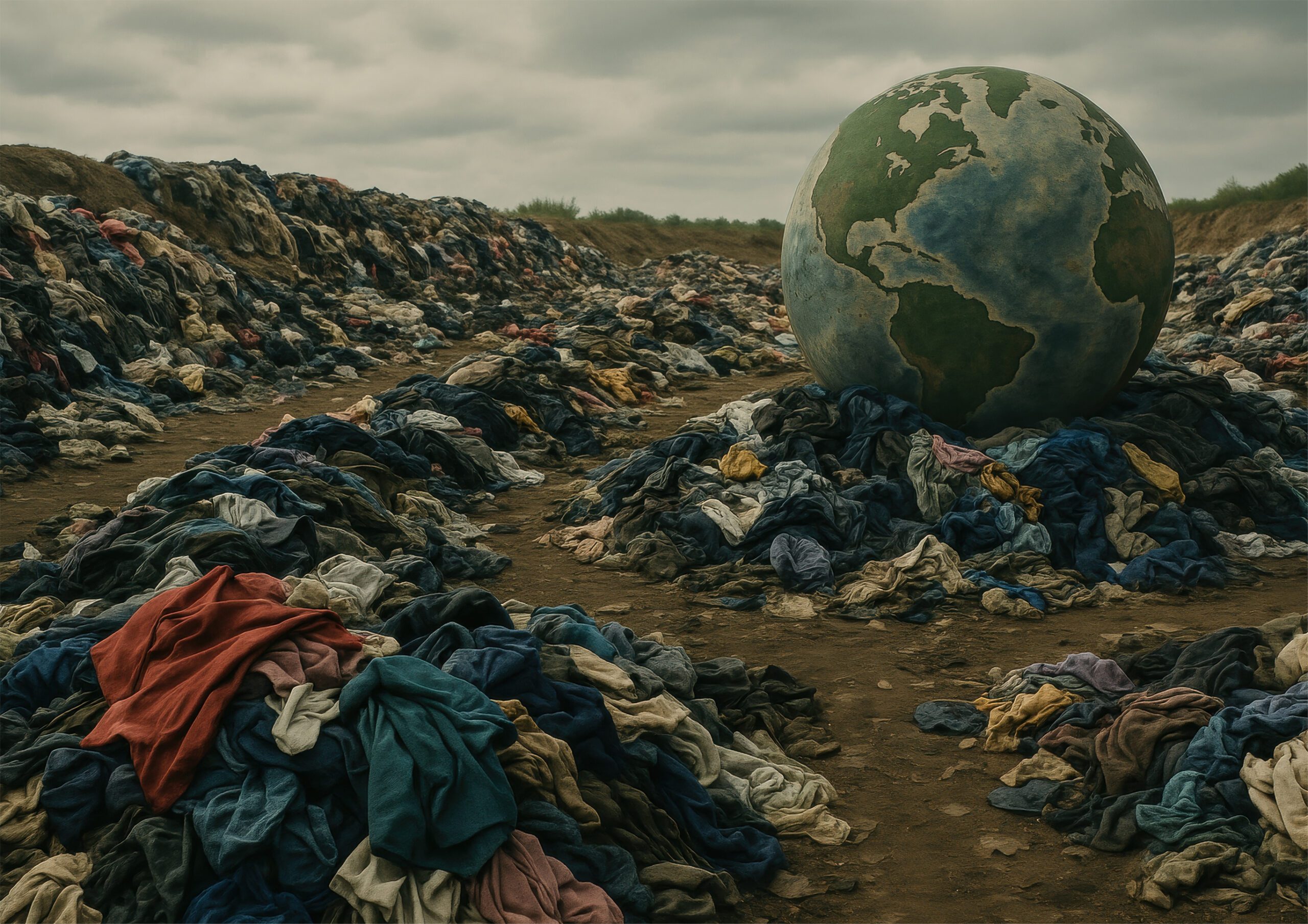
Fast fashion textile waste in environmental dump site

U.S. Federal Agencies Propose Significant Regulatory Cutbacks

Several recent proposals to cut back on longstanding EHS regulatory programs have been issued by the US Environmental Protection Agency (EPA) and Occupational Safety and Health Administration (OSHA) under the Labor Department. On September 16, 2025, the EPA published   Reconsideration of the Greenhouse Gas Reporting Program (GHGRP) to eliminate the majority of this Program, which requires thousands of facilities and organizations to report annual greenhouse gas (GHG) emissions under 40 CFR part 98. OSHA published a similarly impactful series of   proposed Labor Department rules on July 1 to revise or repeal more than two dozen of its occupational safety and health standards, justifying many of these changes as required to remove duplication and/or increase employers’ flexibility.

Since 2011, the EPA’s GHGRP has required reporting from qualifying entities based on GHGs emitted and/or the industrial sector of the emission source. Over the years, along with technical amendments, the EPA has added source categories, including, most recently, an addition to the Clean Air Act (CAA, section 136) that  specifies reporting requirements for most petroleum and natural gas sector facilities (part 98 subpart W). The EPA justifies the cutbacks by asserting that CAA section 114 does not provide authority for GHGRP requirements, eliminating all but those supported by section 136  (which are deferred until 2034). EPA also provides an alternative justification: that all but the specified subpart W requirements are

Several recent proposals to cut back on longstanding EHS regulatory programs have been issued by the US Environmental Protection Agency (EPA) and Occupational Safety and Health Administration (OSHA) under the Labor Department. On September 16, 2025, the EPA published   Reconsideration of the Greenhouse Gas Reporting Program (GHGRP) to eliminate the majority of this Program, which requires thousands of facilities and organizations to report annual greenhouse gas (GHG) emissions under 40 CFR part 98. OSHA published a similarly impactful series of   proposed Labor Department rules on July 1 to revise or repeal more than two dozen of its occupational safety and health standards, justifying many of these changes as required to remove duplication and/or increase employers’ flexibility.

Since 2011, the EPA’s GHGRP has required reporting from qualifying entities based on GHGs emitted and/or the industrial sector of the emission source. Over the years, along with technical amendments, the EPA has added source categories, including, most recently, an addition to the Clean Air Act (CAA, section 136) that  specifies reporting requirements for most petroleum and natural gas sector facilities (part 98 subpart W). The EPA justifies the cutbacks by asserting that CAA section 114 does not provide authority for GHGRP requirements, eliminating all but those supported by section 136  (which are deferred until 2034). EPA also provides an alternative justification: that all but the specified subpart W requirements are discretionary, and it chooses to exercise  its discretion not to require reporting. The comment deadline for EPA’s proposal was November 3, 2025; experts expect EPA to move quickly to finalize these repeals before next year’s annual GHGRP reporting deadline of March 31, 2026.  

Upon approval, OSHA’s deregulation proposals would: amend 13 substance-specific standards to align with the general Respiratory Protection Standard at 29 CFR 1910.34; rescind illumination requirements for construction sites; withdraw a proposed rule to require OSHA 300 log reporting for musculoskeletal disorders; eliminate safety color code standards that are duplicative with local building and fire codes; repeal the emergency COVID-19 standard and reporting requirements; and limit the applicability of the General Duty Clause by specifying that it does not apply to hazards arising from “inherently risky professional activities” (e.g., live entertainment and performing arts; sports and high-risk recreation activities; tactical, defense, and combat simulation training; and hazard-based journalism activities) where the risks cannot be eliminated.  

It’s important to note that these federal changes do not directly affect independent state-level GHG reporting requirements or health and safety regulations in states with approved state plans until the states incorporate the changes, which may lead to more patchwork requirements across the country.

discretionary, and it chooses to exercise its discretion not to require reporting. The comment deadline for EPA’s proposal was November 3, 2025; experts expect EPA to move quickly to finalize these repeals before next year’s annual GHGRP reporting deadline of March 31, 2026.  

Upon approval, OSHA’s deregulation proposals would: amend 13 substance-specific standards to align with the general Respiratory Protection Standard at 29 CFR 1910.34; rescind illumination requirements for construction sites; withdraw a proposed rule to require OSHA 300 log reporting for musculoskeletal disorders; eliminate safety color code standards that are duplicative with local building and fire codes; repeal the emergency COVID-19 standard and reporting requirements; and limit the applicability of the General Duty Clause by specifying that it does not apply to hazards arising from “inherently risky professional activities” (e.g., live entertainment and performing arts; sports and high-risk recreation activities; tactical, defense, and combat simulation training; and hazard-based journalism activities) where the risks cannot be eliminated.  

It’s important to note that these federal changes do not directly affect independent state-level GHG reporting requirements or health and safety regulations in states with approved state plans until the states incorporate the changes, which may lead to more patchwork requirements across the country. 

Industrial facility releasing smoke into the air during sunset, highlighting environmental pollution and industrial activities.

South Korea Updates Its Chemical Management System

In August of 2025, South Korea finalized over two dozen measures resulting in a major re-organization of its chemical management system under the Act on Registration, Evaluation, etc., of Chemical Substances (K-REACH) and the Chemicals Control Act (CCA). The revised system differentiates management requirements for each toxic substance category, including the new category, Accident Preparation Chemicals, and renames the existing categories, Acute Toxic Substances for Human Health, Chronic Toxic Substances for Human Health, and Ecological Toxic Substances. Over the next five years, these amendments will require Korean facilities to reclassify their chemical inventories, update SDS and labels, update accident prevention plans, and obtain necessary permits based on these changes. Transitional provisions in   NICS Notice No. 2025-19 grant extensions to compliance periods for existing handlers of reclassified or

In August of 2025, South Korea finalized over two dozen measures resulting in a major re-organization of its chemical management system under the Act on Registration, Evaluation, etc., of Chemical Substances (K-REACH) and the Chemicals Control Act (CCA). The revised system differentiates management requirements for each toxic substance category, including the new category, Accident Preparation Chemicals, and renames the existing categories, Acute Toxic Substances for Human Health, Chronic Toxic Substances for Human Health, and Ecological Toxic Substances. Over the next five years, these amendments will require Korean facilities to reclassify their chemical inventories, update SDS and labels, update accident prevention plans, and obtain necessary permits based on these changes. Transitional provisions in   NICS Notice No. 2025-19 grant extensions to compliance periods for existing handlers of reclassified or  newly designated substances to fulfill obligations under the CCA. These include the following compliance deadlines for companies: By July 1, 2026: Complete a chemical verification (confirming the identity and hazards of chemicals), update labels and SDS to reflect the new classifications, and apply import declarations for imported hazardous substances; By January 1, 2027: Meet updated handling standards for the identified chemicals; By January 1, 2028: Submit an updated Chemical Accident Prevention Management Plan and obtain the necessary business permits or file business reports; and By January 1, 2030: Ensure facilities and equipment meet the updated installation and management standards. Other related changes include comprehensive revisions to the existing hazardous chemical threshold quantities and the addition of a new “lowest threshold quantity” with reporting obligations expected to apply to a broader range of facilities handling smaller amounts of hazardous chemicals. 

newly designated substances to fulfill obligations under the CCA. These include the following compliance deadlines for companies: By July 1, 2026: Complete a chemical verification (confirming the identity and hazards of chemicals), update labels and SDS to reflect the new classifications, and apply import declarations for imported hazardous substances; By January 1, 2027: Meet updated handling standards for the identified chemicals; By January 1, 2028: Submit an updated Chemical Accident Prevention Management Plan and obtain the necessary business permits or file business reports; and By January 1, 2030: Ensure facilities and equipment meet the updated installation and management standards. Other related changes include comprehensive revisions to the existing hazardous chemical threshold quantities and the addition of a new “lowest threshold quantity” with reporting obligations expected to apply to a broader range of facilities handling smaller amounts of hazardous chemicals. 

Industrial workers gather in large warehouse for safety training.

New Prevention-Oriented OHS Regime in Quebec

As of October 1, 2025, employers in Quebec with 20 or more workers are now required to develop, implement and annually update a prevention program which identifies, analyzes and addresses workplace risks (e.g., chemical, biological, physical, ergonomic, psychosocial). The program must include measures and priorities for actions to eliminate these risks or, if that is not possible, to control them. Similarly, employers with fewer than 20 workers must implement and annually update a simplified action plan. New rules for occupational health and safety (OHS) committees and representatives, including meeting frequency and member training, are specified based on the size and classification level of the establishment, as identified by the North American Industry Classification System (NAICS) 2012 Code. These requirements were published under Order-in-Council no. 1155-2025, which issued the new implementing Regulation respecting prevention and participation mechanisms in an establishment (Règlement sur les mécanismes de prévention et de participation en établissement) mandating the requirements above, along with four amending regulations, making related revisions to the Regulation

As of October 1, 2025, employers in Quebec with 20 or more workers are now required to develop, implement and annually update a prevention program which identifies, analyzes and addresses workplace risks (e.g., chemical, biological, physical, ergonomic, psychosocial). The program must include measures and priorities for actions to eliminate these risks or, if that is not possible, to control them. Similarly, employers with fewer than 20 workers must implement and annually update a simplified action plan. New rules for occupational health and safety (OHS) committees and representatives, including meeting frequency and member training, are specified based on the size and classification level of the establishment, as identified by the North American Industry Classification System (NAICS) 2012 Code. These requirements were published under Order-in-Council no. 1155-2025, which issued the new implementing  Regulation respecting prevention and participation mechanisms in an establishment (Règlement sur les mécanismes de prévention et de participation en établissement) mandating the requirements above, along with four amending regulations, making related revisions to the Regulation  respecting occupational health (Règlement sur la santé et la sécurité du travail), Hazardous Products Information Regulation (Règlement sur l’information concernant les produits dangereux), Regulation respecting industrial and commercial establishments (Règlement sur les établissements industriels et commerciaux), and the Regulation respecting occupational health and safety in mines (Règlement sur la santé et la sécurité du travail dans les mines). The Order also repealed the prior Regulation respecting prevention programs (Règlement sur le programme de prévention).

Although the  Regulation respecting prevention and participation mechanisms in an establishment includes transitional provisions, on October 8, 2025, a  proposal was published to provide an additional six months for OHS committee members and representatives to complete the specified training in the new Regulation. This proposal is currently under review with the Commission des normes, de l’équité, de la santé et de la sécurité du travail (the CNESST); the comment period is open through November 22, 2025.

respecting occupational health (Règlement sur la santé et la sécurité du travail), Hazardous Products Information Regulation (Règlement sur l’information concernant les produits dangereux), Regulation respecting industrial and commercial establishments (Règlement sur les établissements industriels et commerciaux), and the Regulation respecting occupational health and safety in mines (Règlement sur la santé et la sécurité du travail dans les mines). The Order also repealed the prior Regulation respecting prevention programs (Règlement sur le programme de prévention).

Although the  Regulation respecting prevention and participation mechanisms in an establishment includes transitional provisions, on October 8, 2025, a  proposal was published to provide an additional six months for OHS committee members and representatives to complete the specified training in the new Regulation. This proposal is currently under review with the Commission des normes, de l’équité, de la santé et de la sécurité du travail (the CNESST); the comment period is open through November 22, 2025.

Spill Prevention and Energy Development in California

California’s Governor Newsom signed a complex bill into law on September 19, 2025,  SB 237. One of its measures fortifies existing spill prevention through existing Acts while the other addresses energy supply and affordability concerns, including provisions that add a new permit and exemptions from existing protections. 

The bill’s amendments to the Lempert-Keene-Seastrand Oil Spill Prevention and Response and Elder California Pipeline Safety Acts expand the scope of the Certificates of Financial Responsibility (COFR) program and add more stringent testing requirements for pipelines (respectively). Accordingly, non-vessel COFR will be posted on a public website by the program administrator, the Office of Oil Spill Prevention and Response (OSPR). Beginning January 15, 2027, it will solicit public comments on the worst-case spill volume and financial assurance figures declared in each facility’s COFR. OSPR is required to review the comments, revise the criteria and formulas for calculating COFR values (as appropriate), and reissue comment

California’s Governor Newsom signed a complex bill into law on September 19, 2025,  SB 237. One of its measures fortifies existing spill prevention through existing Acts while the other addresses energy supply and affordability concerns, including provisions that add a new permit and exemptions from existing protections. 

The bill’s amendments to the Lempert-Keene-Seastrand Oil Spill Prevention and Response and Elder California Pipeline Safety Acts expand the scope of the Certificates of Financial Responsibility (COFR) program and add more stringent testing requirements for pipelines (respectively). Accordingly, non-vessel COFR will be posted on a public website by the program administrator, the Office of Oil Spill Prevention and Response (OSPR). Beginning January 15, 2027, it will solicit public comments on the worst-case spill volume and financial assurance figures declared in each facility’s COFR. OSPR is required to review the comments, revise the criteria and formulas for calculating COFR values (as appropriate), and reissue comment requests at least once every 10 years. SB 237 also prohibits restarting an existing oil pipeline that is six inches or larger and has been inactive for five years or longer without passing a spike hydrostatic test meeting requirements the State Fire Marshal will promulgate. 

A substantial piece of the energy measure is the new Coastal Development Permit. It creates a pathway for coastal oil and gas development by conditionally exempting new and expanding oil and gas facilities from the more stringent coastal zone development provisions of the California Coast Act of 1976. SB 237 stipulates that to be eligible for the new permit, facilities must exclusively use pipelines with the best available technology for moving oil between the extraction and processing facilities, including offshore to onshore. Other new energy-related laws make it easier to reactivate oil and gas facilities or increase extraction using different methods, grant new authority to the governor to suspend temporarily summer gasoline blend requirements, and exempt thousands of idle wells in Kern County from any zoning and standard environmental reviews for ten years, primarily due to litigation.

requests at least once every 10 years. SB 237 also prohibits restarting an existing oil pipeline that is six inches or larger and has been inactive for five years or longer without passing a spike hydrostatic test meeting requirements the State Fire Marshal will promulgate. 

A substantial piece of the energy measure is the new Coastal Development Permit. It creates a pathway for coastal oil and gas development by conditionally exempting new and expanding oil and gas facilities from the more stringent coastal zone development provisions of the California Coast Act of 1976. SB 237 stipulates that to be eligible for the new permit, facilities must exclusively use pipelines with the best available technology for moving oil between the extraction and processing facilities, including offshore to onshore. Other new energy-related laws make it easier to reactivate oil and gas facilities or increase extraction using different methods, grant new authority to the governor to suspend temporarily summer gasoline blend requirements, and exempt thousands of idle wells in Kern County from any zoning and standard environmental reviews for ten years, primarily due to litigation. 

Aerial view of an industrial area with oil tanks beside a river displaying colorful oil slicks, highlighting environmental pollution.